Call Us Today





Can You Claim Compensation for a Fall If You’re Over 65?
A fall takes a second. A wet patch near the supermarket entrance, a paver lifted by a tree root, a step that nobody marked. Sometimes the result is a bruise and a bruised ego. Sometimes it’s a broken hip, months of recovery and a very different year from the one you’d planned.
If that has happened to you or someone you love, it’s natural to wonder whether anyone else was responsible and what your options are. This guide explains how fall claims work in Victoria, what age does and doesn’t change, and what to do in the days after a fall.
Quick answer: Yes. Age is not a barrier to making a claim in Victoria. If you were injured in a fall because someone responsible for the place, such as a shop, a council or a property owner, did not take reasonable care, you may be able to claim compensation under the Wrongs Act 1958 (Vic). Whether you can depends on the circumstances, how serious and lasting your injury is, and starting within the time limit, which is generally three years from when your claim becomes discoverable.
Why a fall can change more than your health
Falls are the leading cause of injury hospitalisations in Australia. The Australian Institute of Health and Welfare (AIHW) reports 253,800 fall-related hospitalisations in 2024–25, and just over half involved a fracture. People aged 65 and over were hospitalised for falls about 12 times as often as adults aged 25 to 44.
The figures don’t show what a serious fall does to daily life. A broken hip or wrist can mean a long stay in hospital, weeks of rehabilitation, help with showering or shopping, and a new nervousness about going out. For many people, the biggest worry is independence.
Nor is this only a concern for the very elderly. AIHW data shows women aged 60 to 64 had the highest hospitalisation rate for slips, trips and stumbles within the 50 to 64 age range.
When a fall may lead to a claim
In Victoria, a claim for a fall in a public place or on someone else’s property is generally a public liability claim under the Wrongs Act 1958 (Vic). The central question is whether the person or organisation responsible for the place failed to take reasonable care, and whether that failure caused your injury. Falling isn’t enough on its own. Our general guide to slip, trip and fall claims in Victoria covers the basics for all ages.
A few situations sit outside this. If you fell at work, WorkCover rules apply instead. A fall involving a tram, train, bus or car may come under the TAC scheme. A lawyer can tell you which applies.
Shops, centres, cafés and venues
Businesses are expected to take reasonable steps to keep floors and walkways safe. In practice that can include regular inspections, prompt clean-up of spills, warning signs on wet floors, and matting at entrances when it’s raining. Whether a business did those things, and whether it followed its own system, may matter a great deal.
Insurers sometimes argue that you should have seen the hazard. That argument is often weaker than it sounds. A clear liquid on a polished floor is hard to spot, and nobody shops with their eyes on their feet.
Footpaths and council property
Councils look after most footpaths. Under the Road Management Act 2004 (Vic), a council can adopt a Road Management Plan that sets out how often it inspects and repairs its paths, and it can rely on certain statutory defences, including in some circumstances where it has followed that plan. Footpath claims therefore tend to turn on detail: where the defect was, how serious it was, how long it had been there and what the council’s plan required. We explain more in our guide to compensation for a footpath trip.
If you trip on a footpath, photograph the spot as soon as you can, with something in the shot for scale, and note exactly where it is. A lawyer can seek the council’s inspection and repair records.
Someone else’s home or property
A fall at a friend’s house or a neighbour’s property can lead to a claim too, though many people feel uncomfortable even thinking about it. Where the owner has suitable insurance, the claim is usually handled by their insurer rather than coming out of their own pocket. Whether cover exists and applies is something a lawyer can check for you.
Falls that usually don’t lead to a claim
Most falls aren’t anyone’s fault, and we’d rather say so plainly. AIHW’s data shows that, for people aged 65 and over, hospitalisations from falls at home are far more common than from falls on streets or in shops and other service areas (AIHW cautions that place of occurrence is missing for some records). A fall on your own stairs or in your own bathroom generally won’t lead to a claim unless something like a faulty product or poor workmanship played a part. A trip over a hazard that was obvious and easy to avoid can also be hard to pursue.
Does your age affect your claim?
Age doesn’t stop you from claiming. The law asks whether someone failed to take reasonable care and caused your injury, not how old you are. Reasonable care can also take account of who is likely to use a space, including people who walk slowly or use a stick or frame.
Age can come into a claim in other ways, and it’s better to know that early. Insurers often point to pre-existing conditions such as arthritis or osteoporosis and argue that your difficulties would have developed anyway, so good medical evidence about what the fall actually changed matters. Future costs, such as ongoing care, are calculated over your expected future, so age can affect those figures. And an insurer may suggest you were partly to blame, which is called contributory negligence. In Victoria, being partly responsible doesn’t automatically end a claim, but it may reduce what’s awarded.
What a claim can include
Compensation can potentially account for several kinds of loss, depending on the circumstances. For people in this age group, the main ones are usually:
- Medical and rehabilitation costs, past and future, including aids and equipment
- Care and assistance, including unpaid help from family and friends
- Out-of-pocket costs, such as transport to appointments
- Pain and suffering and loss of enjoyment of life, if your injury meets the legal threshold
- Lost income, if you were still working or would have kept working
Every claim is different, and no amount can be promised in advance. Our article on how compensation lawyers calculate claim value explains the general approach.
Care and assistance from family
If your partner, children or friends have been helping with showering, cooking, driving or housework since your fall, that unpaid help may be something a claim can recognise. The law sets a minimum: the care must be needed for at least six hours a week and for at least six months before damages can be awarded for it, and caps apply to the amount. A simple diary of who helps, what they do and how long it takes is easy to keep and useful later.
The “significant injury” threshold
In Victoria, you can claim damages for pain and suffering and loss of enjoyment of life only if your injury is assessed as a “significant injury”.
For most physical injuries that means a permanent impairment of more than 5 per cent of the whole person, assessed by an approved medical practitioner. The thresholds are 5 per cent or more for spinal injuries and 10 per cent or more for psychiatric injuries. If the other side disputes the assessment, a Medical Panel can decide the question.
These assessments are technical, so it’s worth getting advice before assuming your injury does or doesn’t qualify. The threshold applies to pain and suffering. Other kinds of loss, such as medical costs and care, are not subject to it, although they have their own limits.
How long do you have?
For most fall claims, you generally have three years from the date your claim becomes “discoverable” under the Limitation of Actions Act 1958 (Vic). Broadly, that’s when you know you’ve been injured, that someone else’s fault caused it and that the injury is serious enough to justify a claim. In a typical fall, that date is close to the day of the fall, so the safest approach is to count from the fall itself. Our guide to time limits for personal injury claims in Victoria goes into more detail.
There’s also an outer limit of 12 years from the date of the act or omission that caused the injury. Courts can extend time in some circumstances, but you shouldn’t count on it.
A longer period of six years from discoverability applies to people under a legal disability, which can include people of unsound mind, for example because of significant cognitive impairment. Whether that applies depends on the person’s circumstances and medical evidence.
Evidence can also disappear quickly. CCTV footage may be overwritten, cleaning records change and memories fade, which is another reason not to wait.
What to do after a fall
- Get checked by a doctor, even if you feel fine at first. Some injuries, including head injuries, can take time to show. Tell the doctor exactly how the fall happened.
- Report the fall to the shop, venue or council, and ask for a copy of the incident report. Note the name of anyone you speak with. Don’t sign anything you don’t fully understand.
- Photograph the spot: the hazard, the surrounding area, any signs, the lighting and the weather. Keep the shoes you were wearing.
- Collect names and phone numbers of anyone who saw what happened.
- Keep your records: medical reports, receipts, appointment dates and a simple diary of your symptoms and the help you’ve needed.
- Be careful with insurers. Be polite, but think twice before giving a recorded statement or accepting an early offer. Settlements are generally final.
- Talk to a personal injury lawyer early, while the evidence is still available. If you can’t do these things yourself, a family member can do many of them for you.
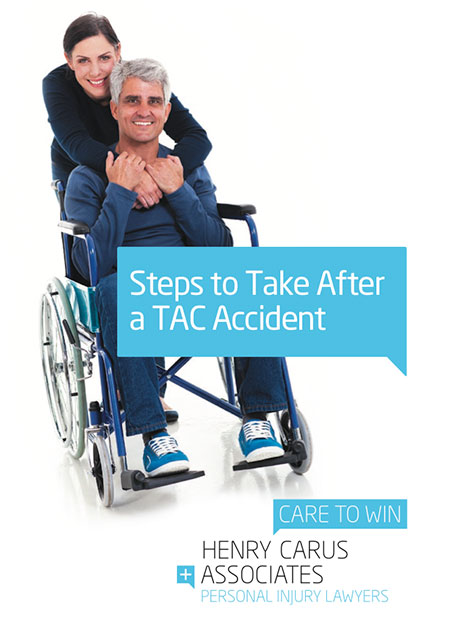
Want to know what to do after a fall in a public place?
We’ve put together a free Slip and Fall Guide that walks through the steps to take after a serious fall, the evidence worth keeping and what to expect if you decide to make a claim.
Download our free Slip and Fall Guide
If you’re helping a parent or partner
Many fall claims begin with a phone call from a son, a daughter or a partner. You can do a great deal to help: taking photos, collecting names, keeping track of appointments and care, and sitting in on conversations. Decisions about a claim belong to the injured person, though, and if they can’t make those decisions themselves, a formal arrangement may be needed. One of our experienced public liability lawyers can explain the options.
Frequently asked questions
Can I claim compensation for a fall if I’m over 65?
Yes. Age doesn’t prevent a claim in Victoria. What matters is whether someone responsible for the place failed to take reasonable care, that failure caused your injury, and your injury meets the legal thresholds. A conversation with a lawyer is the quickest way to find out where you stand.
Does my age reduce how much I can claim?
Not automatically, but age can affect some parts of a claim. Future costs are worked out over your expected future, and insurers may point to pre-existing conditions. A lawyer can explain how this applies to your injuries.
What if I fell at home?
Many falls at home don’t lead to a claim, because nobody else was responsible. A claim may be possible if something outside your control contributed, such as poor workmanship, a faulty product or, in some cases, a landlord’s failure to fix a known hazard. The details matter, so it’s worth asking before you rule it out.
Can I claim if I tripped on a footpath?
Possibly. Councils can be responsible for footpath hazards, but they may rely on statutory defences linked to their Road Management Plans, so the details matter. Photograph the spot and note the exact location as soon as you can.
How long do I have to make a claim?
Generally three years from when your claim becomes discoverable, with an outer limit of 12 years, and six years for people under a legal disability. Because the date can be hard to work out and evidence fades quickly, it’s best not to wait.
Can a family member make a claim for me?
A claim is generally made by the injured person, but family can do a lot to help, from collecting evidence to attending appointments. If the injured person can’t make decisions for themselves, a formal legal arrangement may be needed. A lawyer can explain what’s involved.
Should I accept an insurer’s early offer?
Take advice first. Settlements are generally final, so if your recovery turns out harder than expected, you usually can’t go back and ask for more. An early offer may be made before the long-term effects of your injury are clear.
How Henry Carus + Associates can help
If you or someone you love has been seriously injured in a fall in Victoria, you deserve clear answers and the time to understand your options before you decide anything. Our specialist personal injury legal team will listen to what happened, explain whether a claim may be possible and what it would involve, and tell you plainly if it isn’t.
We act on a true No Win, No Fee agreement. We also offer a 90-Day Client Satisfaction Guarantee. If, within the first 90 days, you don’t feel confident in the service, support or representation you’re receiving, you can choose to leave, and there are no legal fees to pay for the work completed in that time.
Speak with our public liability team on 03 9001 1318, or contact us online for a confidential discussion.
This article is general information only and does not constitute legal advice. If you have been injured, please contact our office to discuss the circumstances of your claim.