Call Us Today




Your car is one thing. You are another.
Here’s where you actually stand for pothole accident compensation under Victoria’s no-fault system.
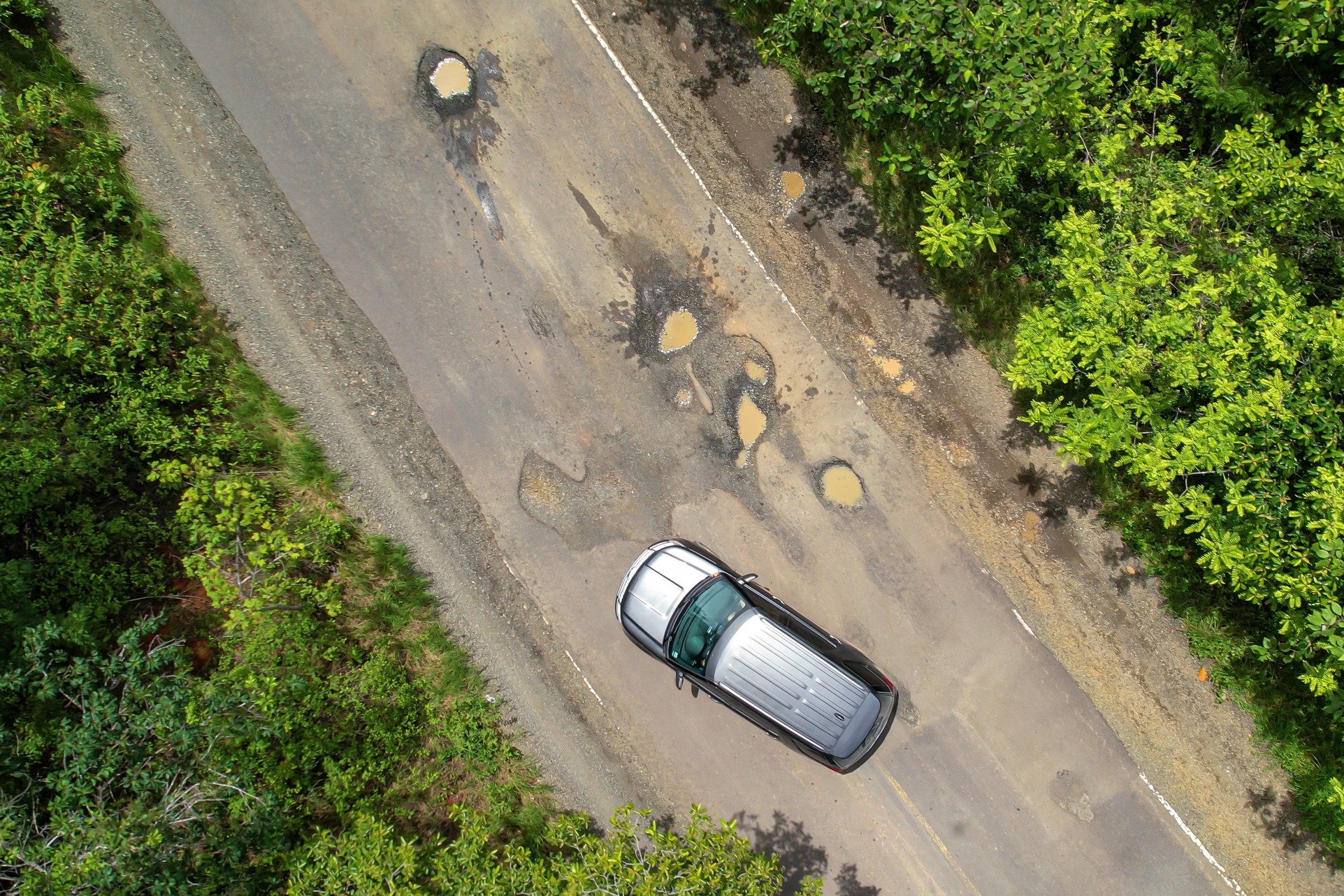
You know the sound. That heavy thud as a wheel drops into a crater you never saw coming, followed by the sinking feeling that this is going to cost you. For a lot of Victorians right now, it ends in a blown tyre, a bent rim, or a towing bill on the way home. And just last week, an official report confirmed what most of us already suspected from the driver’s seat.
The Victorian Auditor-General report found that 48 per cent of state-managed roads were in poor or very poor condition in 2024, up from 39 per cent in 2021, and that the network is now deteriorating faster than it is being repaired. Both major parties have since promised billions to fix it ahead of November’s state election. That is cold comfort when the damage has already been done.
A ruined tyre is frustrating and expensive. But the same roads that shred rubber can do something far more serious: they can cause a crash, and they can hurt people. That is the part that does not make the headlines, and it is where our focus at Henry Carus + Associates sits.
Sadly, this is not hypothetical. In recent days, a much-loved Victorian motorcyclist died following a crash on the Western Highway near Ballarat, amid reports that a pothole may have been involved. The cause is still being examined, and our thoughts are with his family, his friends and the wider riding community. It is a sombre reminder that a road in poor repair is not just a hit to the hip pocket — for people on two wheels in particular, the consequences can be devastating.
Quick answer
If you are injured in a car accident in Victoria, including a single-vehicle crash caused by a pothole or a poor road surface, you may be entitled to support through the Transport Accident Commission (TAC), regardless of who or what caused it. That is because the TAC is a no-fault scheme. Damage to your vehicle is a separate matter, handled by the relevant road authority rather than the TAC.
What the Auditor-General’s report actually found
The report, titled Maintaining State Roads, was tabled in Victorian Parliament on 9 September 2026. A few figures stand out:
- Nearly half the state-managed network (48%) was rated poor or very poor in 2024, up from 39 per cent three years earlier.
- The gap between road defects recorded and defects repaired more than doubled between January 2025 and June 2026.
- The Department of Transport and Planning has advised that it would cost more than $3 billion a year just to hold road condition where it is while replacing ageing assets.
With an election due in late November, both sides have made commitments: the Government has pledged an extra $352 million to double the number of potholes repaired this year to 500,000, and the Coalition has promised $5 billion over four years to fix a million. Whether either is enough is a question for the political debate. Our interest is narrower and more practical: what it means for you if a road causes you harm.
First, if a pothole has damaged your car — not you
Let’s deal with the common one quickly, because it is not something we handle, and we would rather point you to the right place than leave you guessing.
If a pothole has damaged your vehicle, that is a property matter. You can report it and seek reimbursement from whoever is responsible for the road — the Department of Transport and Planning for state-managed roads such as freeways and major highways, or your local council for local roads. RACV can also help point members in the right direction.
Be aware that road authorities have legal protections under the Road Management Act 2004 (Vic), so these claims are not always straightforward or successful. But you are entitled to ask, and it costs nothing to lodge a report.
Pothole accident compensation Victoria
If you’ve been injured, the picture is very different. If you, or someone you love, has been injured in a car accident on a Victorian road, the situation changes completely, and real support is available. This is where it helps to understand how compensation actually works in this state.
The TAC is a no-fault scheme
In Victoria, anyone injured in a transport accident may be entitled to help from the TAC, regardless of who or what was at fault. A “transport accident” means an injury caused by the driving of a car, motorcycle, bus, train or tram. A single-vehicle crash such as hitting a pothole, losing control, and coming off the road, is caused by the driving of a vehicle, so it can be covered.
Being no-fault is the important part. You do not need another driver to blame. You do not need to prove anyone was negligent. If you were injured in a transport accident connected to Victoria, you may be able to claim even if the accident was partly or wholly your own doing; though some entitlements can be reduced if you contributed to it, for example if you were not wearing a seatbelt.
Depending on your circumstances, TAC support may include:
- reasonable medical and hospital treatment;
- income support if you cannot work;
- rehabilitation and support services;
- travel and related expenses;
- in some cases, a lump-sum impairment benefit.
Many people do not realise any of this. They assume that because no one can be “blamed” for a pothole, there is nothing to claim. That is simply not how the Victorian scheme works.
“But no one was to blame — can I still claim?”
Quite possibly, yes. This is the misunderstanding that stops people from picking up the phone, so it is worth being clear. You can be eligible for TAC no-fault benefits even when:
- no other vehicle was involved;
- you never worked out exactly what caused the crash;
- the cause was a pothole, loose gravel, an animal, or the road surface itself;
- the accident was, in part, your own fault.
The question the TAC asks is not “whose fault was it?” but “were you injured in a transport accident?” If the answer is yes, you may have an entitlement.
Is there anything beyond TAC no-fault benefits?
Sometimes. In addition to no-fault benefits, a person who suffers a “serious injury” (as defined by the legislation) may be able to pursue common law damages — for example, for pain and suffering or economic loss. But there is an important difference: a common law claim generally requires proving that another party was negligent.
For a crash caused purely by a pothole, that is genuinely difficult, because the road authority’s legal protections under the Road Management Act 2004 (Vic) make claims against it hard to establish. Where another driver contributed to the accident, a common law claim may be more realistic. Every situation turns on its own facts — which is exactly why it is worth having someone look at yours properly before you assume the answer either way.
What to do if you’ve been injured on the road
If you have been hurt in a road accident in Victoria, a few practical steps matter:
- Get medical attention. Your health comes first, and early treatment also creates a record of your injuries.
- Report the accident to police and keep the reference number as the TAC generally needs it.
- Keep everything: receipts, medical records, and a note of how the injury is affecting your work and daily life.
- Lodge your TAC claim promptly. As a general rule you have 12 months from the date of the accident. The TAC may accept a late claim up to three years in limited circumstances, but it is far better not to leave it.
- Get advice if you’re unsure. You do not have to work out your entitlements alone.
Want to understand how a TAC claim works?
We’ve put together a free guide explaining the basic steps you should follow if you experience a serious motor vehicle accident:
Frequently asked questions
Can I make a TAC claim if no other car was involved?
Yes, potentially. The TAC is a no-fault scheme, so you may be entitled to support even in a single-vehicle accident, including one caused by a pothole or poor road surface, as long as you were injured in a transport accident connected to Victoria.
Can I claim if the accident was partly my fault?
In most cases, yes. Fault does not decide your eligibility for TAC no-fault benefits. Some entitlements may be reduced if you contributed to the accident, but you can still be covered.
Can I get compensation for hitting a pothole?
It depends on what was damaged. If your car was damaged, that is a property matter for the relevant road authority or council, not the TAC, and those claims can be difficult. If you were injured, you may be entitled to TAC support regardless of the cause.
How long do I have to make a TAC claim?
Generally, 12 months from the date of the accident. The TAC may accept a claim lodged later (up to three years) in limited circumstances, but it is best to lodge as soon as you can.
Who pays for the damage to my vehicle?
Not the TAC. Vehicle damage is a property matter. You can report it and seek reimbursement from the Department of Transport and Planning (for state roads) or your local council (for local roads), though road authorities have legal protections that can limit these claims.
How Henry Carus + Associates can help
An injury affects far more than your body. It affects your income, your family, and your sense of what comes next. You should not also have to navigate a compensation system on your own at the hardest moment.
That is what we are here for. Our Melbourne-based team has an in-depth knowledge of Victoria’s TAC scheme, and we handle the paperwork, the process and the back-and-forth with the TAC so you can focus on recovering. We will explain your options clearly, without pressure and without jargon, and make sure you receive everything you are entitled to.
Your first consultation is free and without obligation. We act on a No Win, No Fee basis. Sometimes a single conversation is enough to understand where you stand.
If a Victorian road has left you or someone you love injured, contact our team for a confidential discussion.
This article is general information only and is not legal advice. Whether you are entitled to support through the TAC depends on your individual circumstances. For advice about your situation, please speak with our team or another qualified personal injury lawyer.